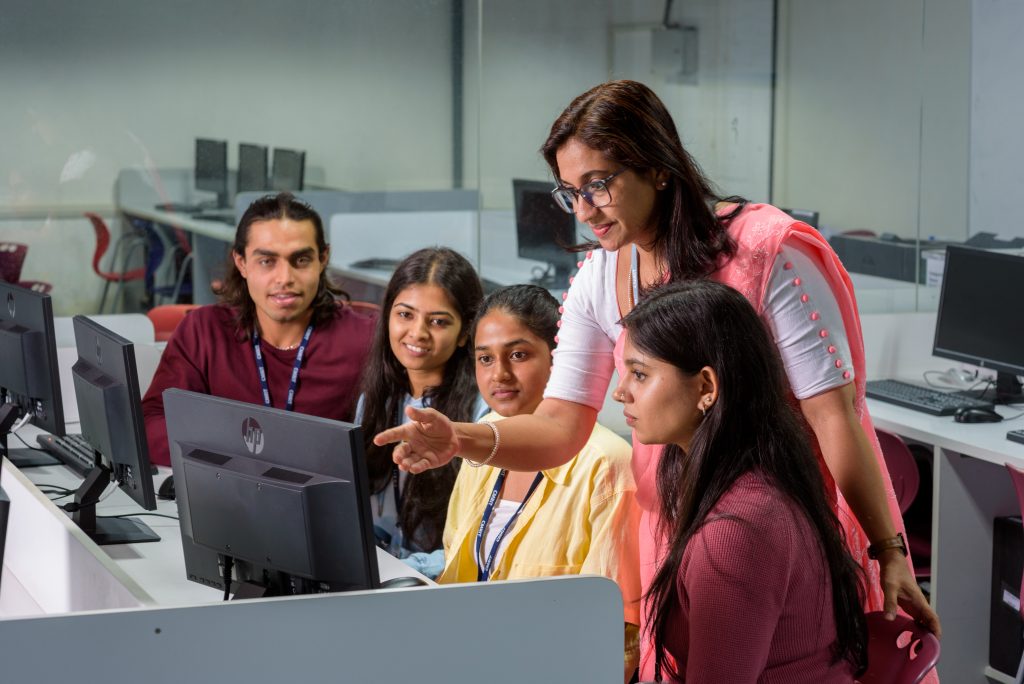
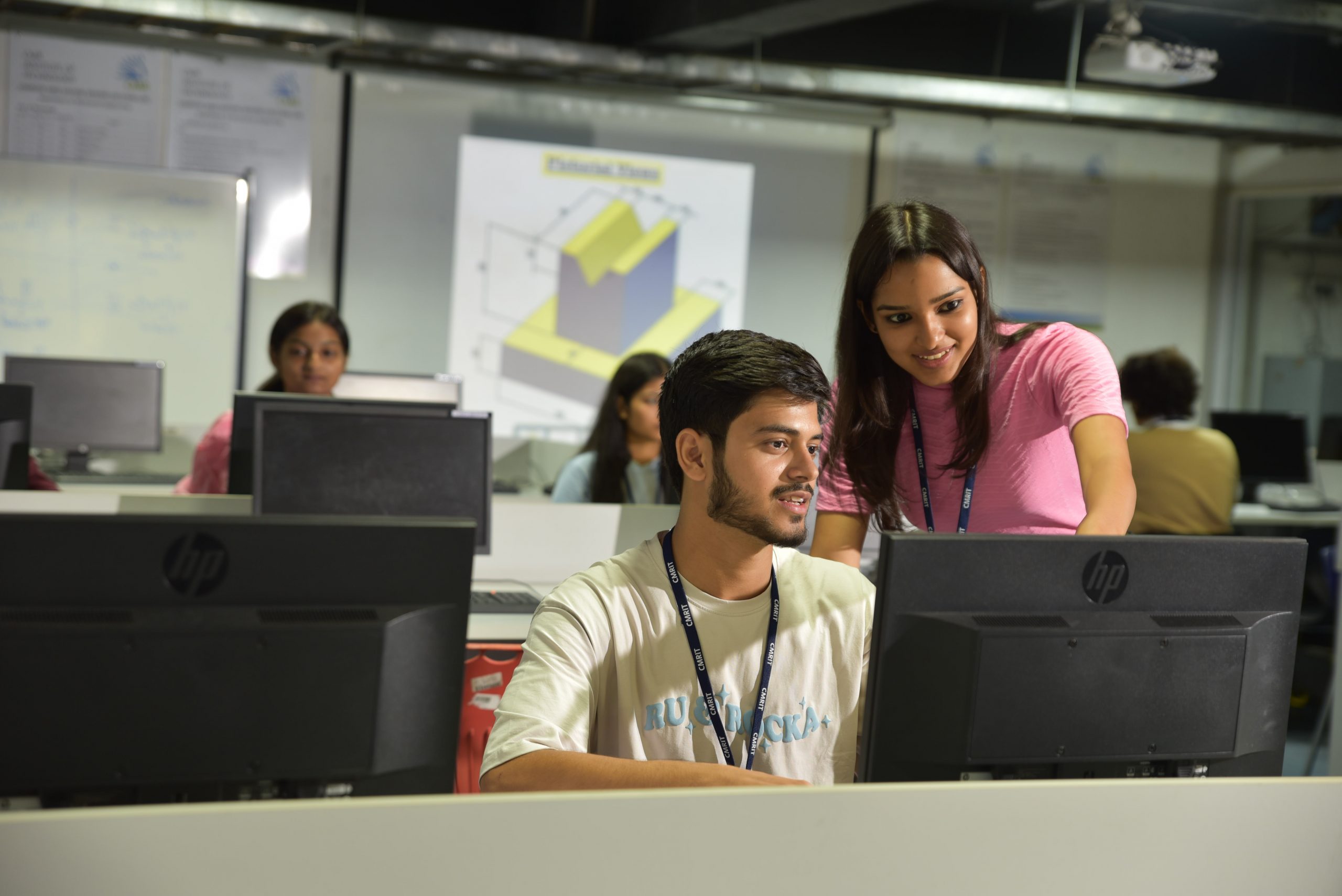
The lab covers foundational C programming, working with arrays, strings, pointers, file handling, sorting and searching together with a Java-based section for placement preparation, where students solve coding problems using arrays, strings and basic Java features. By the end of the course, students gain solid hands-on skills in C as well as improved Java coding and problem-solving ability, ready for building applications or cracking coding interviews.
DBMS & Web Technology Laboratory
The DBMS laboratory enhances students’ understanding of relational database management using SQL. It includes creating and managing databases, defining tables with keys and constraints, and performing data retrieval and manipulation. Students practice advanced concepts such as joins, subqueries, views, stored procedures, triggers, and transaction handling to develop real-time database applications.The Web Technology laboratory focuses on designing and developing interactive web applications. Students learn HTML, CSS, and JavaScript to create structured, styled, and dynamic webpages. The lab includes form validation, event handling, and an introduction to server-side development, enabling students to deploy user-friendly and responsive web interfaces.
ICSSR-LSS Research Project Lab
The ICSSR-LSS Research Project Lab at CMRIT serves as a dedicated interdisciplinary research hub designed to support longitudinal studies in the social and human sciences. The lab provides an integrated environment for data-driven inquiry, combining advanced analytics, AI-powered research tools, and field-based socio-economic investigation frameworks. It facilitates collaborative work among faculty, scholars, and industry partners to design, implement, and evaluate long-term research projects aligned with ICSSR guidelines. Through its structured methodologies, ethical research practices, and community-focused outreach mechanisms, the lab aims to generate high-impact evidence, inform policy decisions, and contribute to national priorities in education, rural development, digital transformation, and social empowerment.
ALUMNI Sports 2025 conducted successfully on 25th January.